Early Signs of Hearing Loss in Children That Can Affect Speech
Is your child not responding when you call their name? Do they seem delayed in speaking compared to other children their age?
Even mild hearing loss in children can affect speech development, language learning, school performance, and social interaction. Because symptoms are often subtle, many parents may not realize their child is struggling to hear.
At ENT Care Centers, our pediatric ENT specialists help families across Kentucky and Southern Indiana identify and treat hearing problems early, before they significantly impact communication and development.
Why Hearing Is Important for Speech Development
Children learn to speak by listening to sounds, words, and conversations around them. When hearing is reduced, even temporarily, it can affect how they process language and develop speech.
Children with untreated hearing loss may struggle with speech clarity, delayed language milestones, understanding instructions, school performance, and communication with others.
Early diagnosis and treatment can greatly improve speech and language outcomes.
Early Signs of Hearing Loss in Children
Here are some of the most common warning signs parents should watch for.
1. Delayed Speech or Language Development
One of the earliest indicators of hearing loss is delayed speech. Your child may say only a few words by age 2, struggle to form sentences, speak less clearly than other children their age, or have difficulty imitating sounds. If your child’s speech development seems slower than expected, hearing loss may be a contributing factor.
2. Not Responding to Sounds or Their Name
Children with hearing difficulties may not consistently respond to everyday sounds. They may ignore their name when called, fail to respond to soft sounds, need the television volume turned unusually high, or appear inattentive and distracted. Sometimes these symptoms are mistaken for behavioral issues or lack of focus.
3. Frequent Ear Infections
Recurring ear infections are one of the most common causes of temporary hearing loss in children. Symptoms may include ear pain, fever, fluid drainage, and trouble hearing during or after infections.
Chronic fluid buildup behind the eardrum can interfere with hearing during important speech-development years.
4. Difficulty Following Directions
If your child often says “What?” or seems confused by verbal instructions, hearing issues could be involved.
Children with hearing loss may miss parts of conversations, struggle in noisy classrooms, have difficulty understanding teachers or caregivers, or become frustrated during conversations.
5. Speaking Too Loudly or Too Softly
Children naturally adjust their voice volume based on what they hear. A child with hearing loss may speak unusually loudly, mumble, speak softly, have unclear pronunciation, or develop abnormal speech patterns.
These changes can develop gradually and may be easy to overlook.
6. Watching Faces Closely While People Speak
Some children compensate for hearing difficulties by relying heavily on visual cues. You may notice your child watching mouths while people talk, sitting very close to speakers, or favoring one ear during conversations.
What Causes Hearing Loss in Children?
Several conditions can affect hearing in infants, toddlers, and older children, including ear infections, congenital hearing loss, enlarged adenoids, excess earwax, and noise exposure.
When Should You See a Pediatric ENT Doctor?
Parents should schedule an evaluation if they notice delayed speech milestones, frequent ear infections, concerns from teachers or caregivers, difficulty hearing or responding, or persistent speech clarity problems.
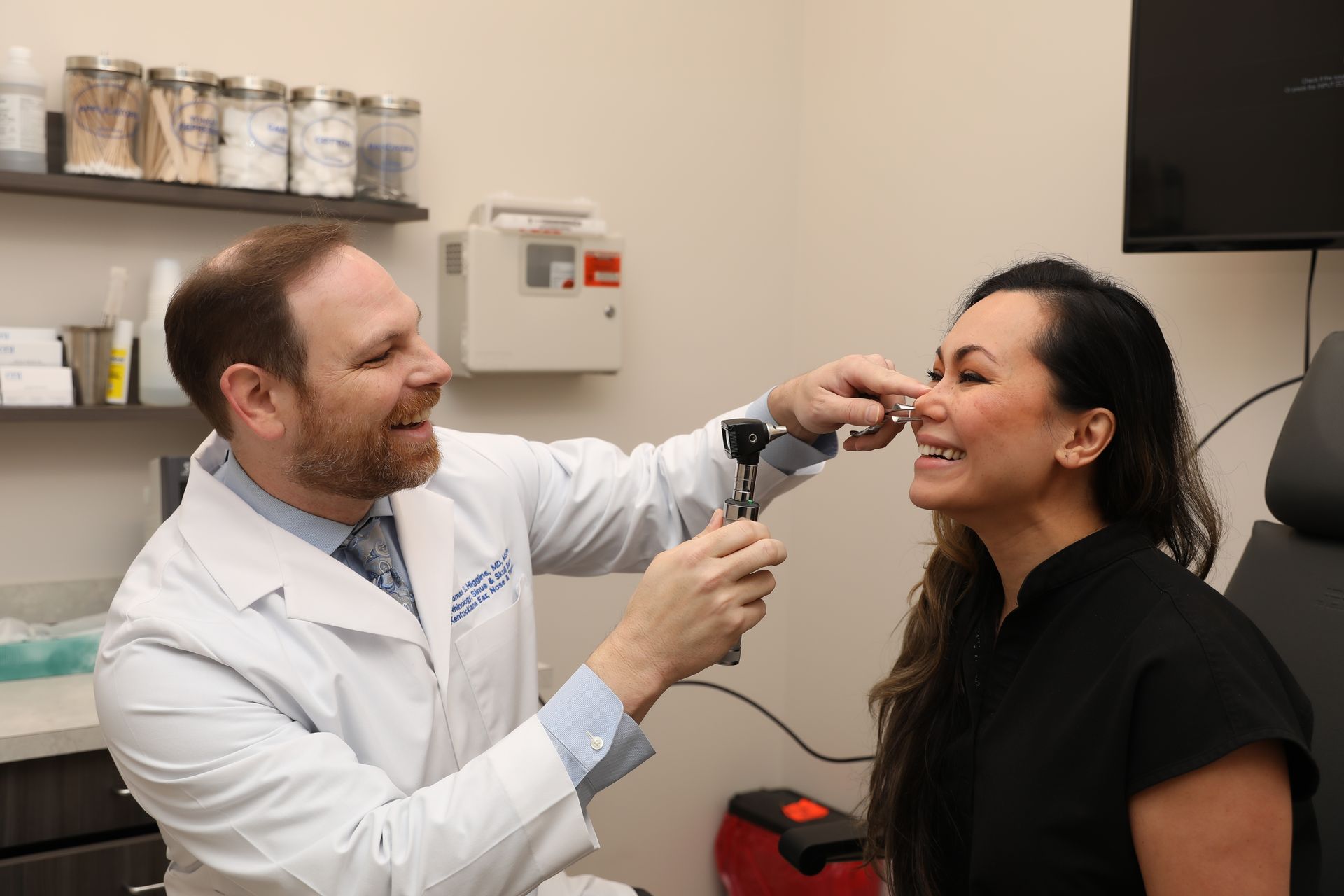
An ENT specialist can examine your child’s ears, evaluate hearing, and determine whether treatment is needed. At ENT Care Centers, our pediatric ENT doctors evaluate hearing issues in children throughout Louisville, Kentucky, and Southern Indiana.
How Hearing Loss Is Diagnosed
Pediatric ENT doctors may recommend hearing tests, tympanometry, speech evaluations, ear examinations, and imaging studies in certain cases. Early diagnosis allows children to receive treatment before speech delays worsen.
Treatment Options for Pediatric Hearing Loss
Treatment depends on the cause and severity of hearing loss.
Options may include:
- Antibiotics for infections
- Ear tubes for chronic fluid buildup
- Hearing aids
- Speech therapy
- Adenoid removal
- Ongoing hearing monitoring
Many children experience significant improvement once hearing problems are addressed.
Can Speech Improve After Hearing Treatment?
Yes. Many children make strong progress in speech and language development after hearing issues are treated, especially when identified early. The earlier intervention begins, the better the long-term outcomes tend to be.
Frequently Asked Questions About Hearing Loss in Children
Can mild hearing loss affect speech?
Yes. Even mild hearing loss can make it harder for children to hear speech sounds clearly, which may delay language development.
Are repeated ear infections harmful to hearing?
Frequent ear infections can temporarily reduce hearing and may impact speech if they occur often or remain untreated.
At what age should hearing problems be evaluated?
Children should be evaluated as soon as symptoms appear. Early treatment is important for speech and learning development.
Can hearing loss in children be temporary?
Some cases—such as fluid buildup or ear infections—may improve with treatment. Other forms of hearing loss may be permanent.
Should I see an ENT doctor or speech therapist first?
Both may help, but an ENT doctor can identify whether hearing issues are contributing to speech delays.
Pediatric Hearing Specialists in Louisville, Kentucky, and Southern Indiana
If you suspect your child may have hearing difficulties, don’t wait to seek answers. Early diagnosis and treatment can help support clearer speech, better learning, and stronger communication skills.
ENT Care Centers provides pediatric hearing evaluations and treatment for families across Louisville, Kentucky, and Southern Indiana.
Our experienced ENT specialists diagnose and treat hearing loss, chronic ear infections, speech-related concerns, and other pediatric ear conditions to help children thrive. Call (502) 837-7838 or schedule your appointment online to get your child the care they need.